Article · Rebates
ACT Sustainable Household Scheme: who qualifies and what will I repay?
On this page
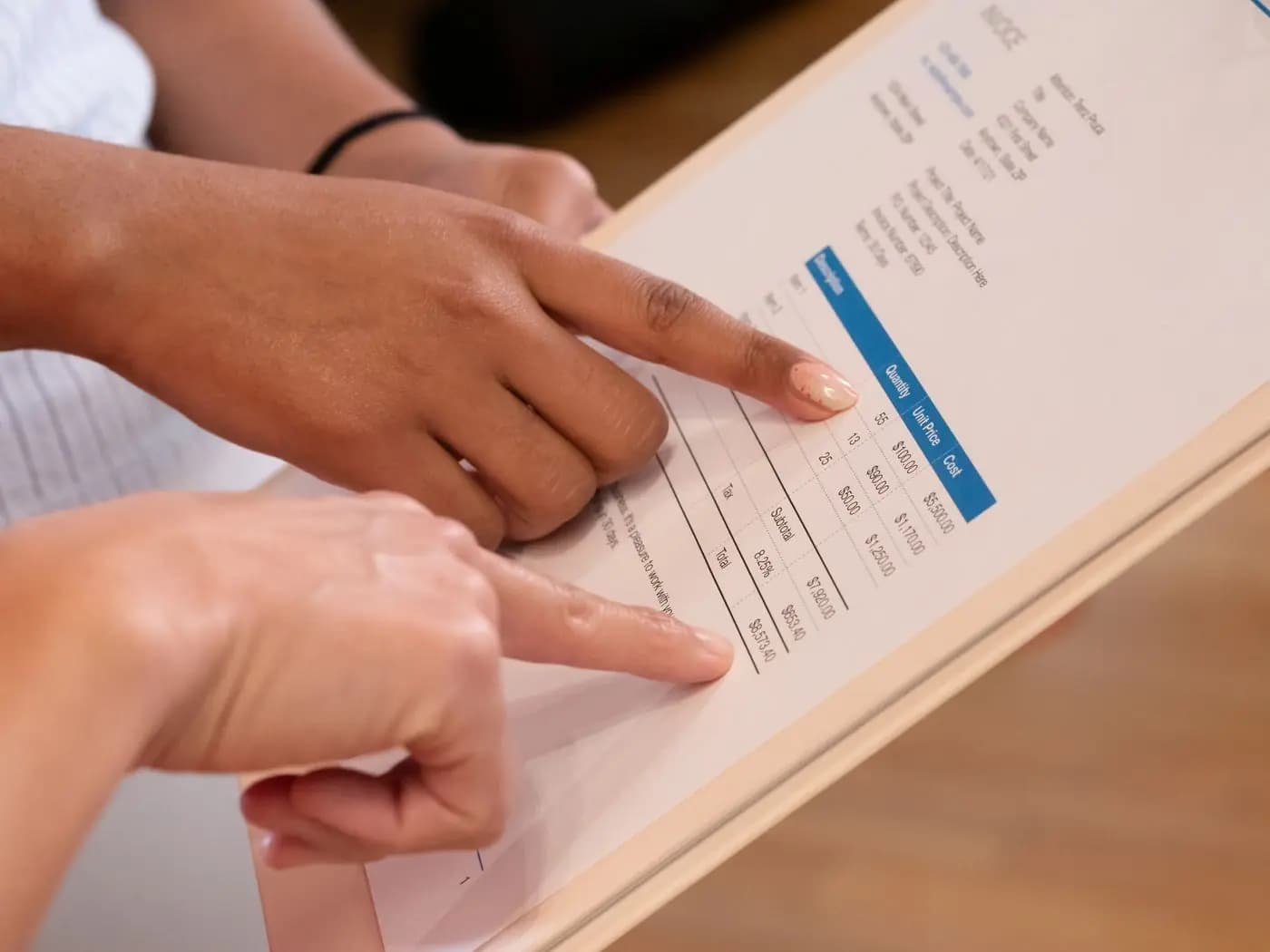
Get your rates notice, any record of earlier scheme borrowing and the complete upgrade quote together. Use the land value on the rates notice when checking eligibility. Then ask for the repayment schedule and the cash contribution required for your particular job.
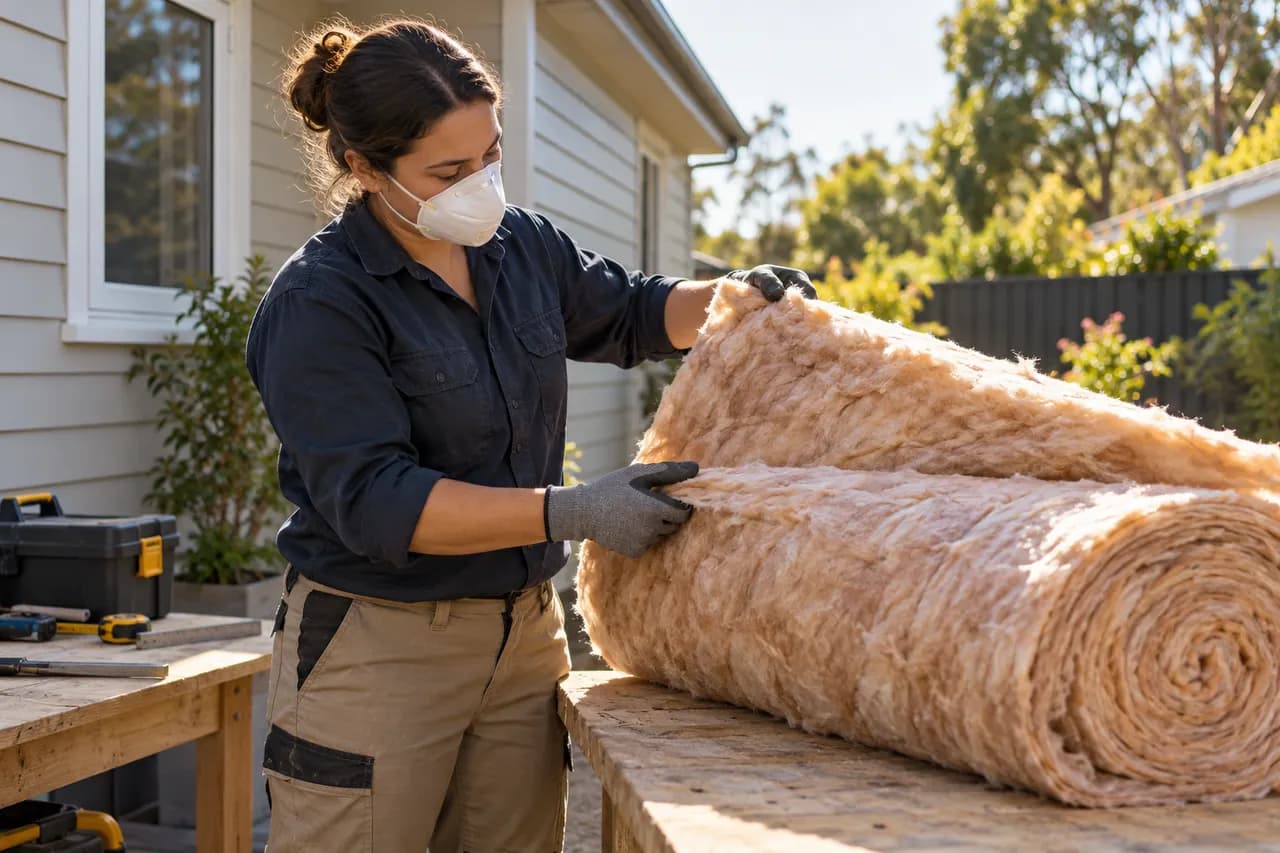
Ceiling insulation keeps warmth in the room below. Manage draughts where cold air gets in, but keep required vents clear.
Keep the warmth. Manage the air.
- Ceiling insulation
- Warm room
- Manage draughts
- Keep required vents clear
Is the ACT Sustainable Household Scheme interest-free?
Standard scheme borrowing is at 3%, rather than zero interest. Eligible Home Energy Support households can access a separate zero-interest loan of up to $10,000 alongside approved rebates. Holding a card does not by itself confirm the loan: program eligibility and the lender’s assessment still apply.
Who can apply for a home upgrade loan?
For an eligible home upgrade, the participant can be the property owner or someone living with the owner. The scheme checks the existing home, the product category and assessed land value. New builds and homes under construction are excluded. A required workshop and Brighte’s credit assessment also apply.
For the relevant battery, appliance-upgrade and insulation categories, the assessed land-value threshold is $750,000 for the specified house and townhouse categories, or $300,000 for unit-titled multi-storey apartments, in an eligible year from 2022. Some properties use their unit-entitlement share. Check the rates notice and the guidelines, rather than estimating from the home’s sale price.
A Queanbeyan home uses NSW upgrade finance rules. The ACT scheme’s home eligibility is tied to an eligible ACT property. Electric vehicles use separate participant and licence requirements.
Does earlier borrowing change my limit?
Yes. Previous participants and households that applied or received approval before 1 July 2026 remain subject to the earlier $15,000 lifetime cap. New applicants can check the $20,000 limit. Earlier use matters when working out what remains available; another appliance does not create a fresh household allowance.
Which upgrades can the loan cover?
Eligible products include household batteries, electric heating and cooling, specified hot-water systems, electric stovetops, EV charging and ceiling insulation. Use the supplier and equipment requirements for the product you want. Rooftop solar is excluded from the standard route and remains a separate option for eligible Home Energy Support households.
What might a $10,000 loan cost each month?
Illustrative budgeting calculation only. Assume $10,000 borrowed over 10 years, a constant 3% annual interest rate charged monthly, 120 equal monthly payments and no fees. A standard amortisation calculation gives approximately $96.56 a month, $11,587 repaid in total and $1,587 in interest. The actual offer, payment frequency, interest calculation and final payment are set by the lender.
| Illustrative input or result | Amount |
|---|---|
| Amount borrowed | $10,000 |
| Assumed annual interest rate | 3% |
| Term | 120 months |
| Approximate monthly repayment | $96.56 |
| Approximate total repaid | $11,587 |
| Approximate interest | $1,587 |
If you qualify for zero interest, the same $10,000 principal divided across 120 months is about $83.33 a month and $10,000 in total, assuming no fees. That is a separate eligibility route, not an option every borrower can select. Use the lender’s repayment schedule for the final budget.
When do repayments start, and are there fees?
The scheme FAQ says repayments start once the product is installed or delivered, with the EV start date agreed with Brighte. The program page says there are no establishment or account-keeping costs, and early repayment has no penalty fee. A late-payment fee may apply. Read both the scheme conditions and the lender’s offer.
How do I decide which work to finance first?
Write down the appliance that needs replacing, the complete installed price and the amount you can afford to contribute. If there is other work planned, ask the supplier to show that sequence too. A failed hot-water system needs a timetable you can work with; an optional upgrade gives you more time to compare quotes.
Ask what electricity use and prices sit behind any claimed running-cost saving. For a heating upgrade in the region, request the winter assumptions as well as the annual total. Use those figures to question the estimate, while keeping the repayments in your budget at the amount the lender actually requires.
What should I do before accepting an upgrade quote?
- Check the home, product and available household limit, including earlier participation.
- Complete the required workshop and get quotes from participating suppliers.
- Separate the confirmed cost after rebates from the amount you want to borrow.
- Ask what you pay now, when repayments start and what you repay in total.
- Compare repayments with your budget. Keep predicted energy savings separate until the assumptions have been checked.
If the repayment schedule would be difficult to meet, check assessed support before accepting work. Access to Electric (opens in a new tab) is a separate route for eligible ACT homeowners in financial hardship. The scheme’s official steps (opens in a new tab) explain the ordinary application and eligibility checks.
Related advice: Gas-to-electric rebates in the ACT: what should I replace first? · Battery rebates in the ACT and NSW: what can I get?
Plan for the cost of your upgraded home
Our government incentives overview (opens in a new tab) links to support programs, and our plan guidance (opens in a new tab) can help you consider the electricity side of the upgrade. Take loan eligibility, available borrowing and repayment questions to the scheme or Brighte. Ask the supplier for the complete installation cost before comparing your budget.
For loan eligibility, available borrowing and repayments, take the rates notice and quote to the scheme or Brighte. If you would also like help with the electricity plan for the upgrade, call 13 14 93. You can enquire whether you are with us now or another retailer. Have the bill, proposed appliances and expected operating times ready.
Sources9
- ACT Government, ‘Access to Electric Program’, Climate Choices (n.d.), https://www.climatechoices.act.gov.au/policy-programs/access-to-electric-program (opens in a new tab), accessed 12 October 2026.
- ACT Government, ‘Sustainable Household Scheme Applicant Terms and Conditions Households’, Climate Choices (September 2026), https://www.climatechoices.act.gov.au/__data/assets/pdf_file/0011/1861571/SHS-Households-Terms-and-Conditions-September-2026.pdf (opens in a new tab), accessed 12 October 2026.
- ACT Government, ‘Sustainable Household Scheme Guidelines for Participants’, Climate Choices (September 2026), https://www.climatechoices.act.gov.au/__data/assets/pdf_file/0010/1861570/Sustainable-Household-Scheme-guidelines-for-participants.pdf (opens in a new tab), accessed 12 October 2026.
- ACT Government, ‘Sustainable Household Scheme Households Frequently Asked Questions’, Climate Choices (September 2026), https://www.climatechoices.act.gov.au/__data/assets/pdf_file/0010/1865863/SHS-Households-Frequently-Asked-Questions-September-2026.pdf (opens in a new tab), accessed 12 October 2026.
- ACT Government, ‘Sustainable Household Scheme’, Climate Choices (n.d.), https://www.climatechoices.act.gov.au/policy-programs/sustainable-household-scheme (opens in a new tab), accessed 13 October 2026.
- ActewAGL, ‘Choosing a Plan’, ActewAGL (n.d.), https://www.actewagl.com.au/for-home/choosing-a-plan (opens in a new tab), accessed 13 October 2026.
- ActewAGL, ‘Contact Us’, ActewAGL (n.d.), https://www.actewagl.com.au/contact (opens in a new tab), accessed 13 October 2026.
- ActewAGL, ‘Government Incentives’, ActewAGL (n.d.), https://www.actewagl.com.au/for-home/energy-efficient-homes/government-incentives (opens in a new tab), accessed 13 October 2026.
- NSW Government, ‘Home Energy Saver’, NSW Climate and Energy Action (updated 7 August 2026), https://www.energy.nsw.gov.au/households/grants-rebates/home-energy-saver (opens in a new tab), accessed 13 October 2026.