Article · Heating & cooling
What can I do about energy costs in a rental?

On this page
Larger upgrades usually involve the property owner. A useful first step is to separate things you can do now from improvements to discuss with your landlord.
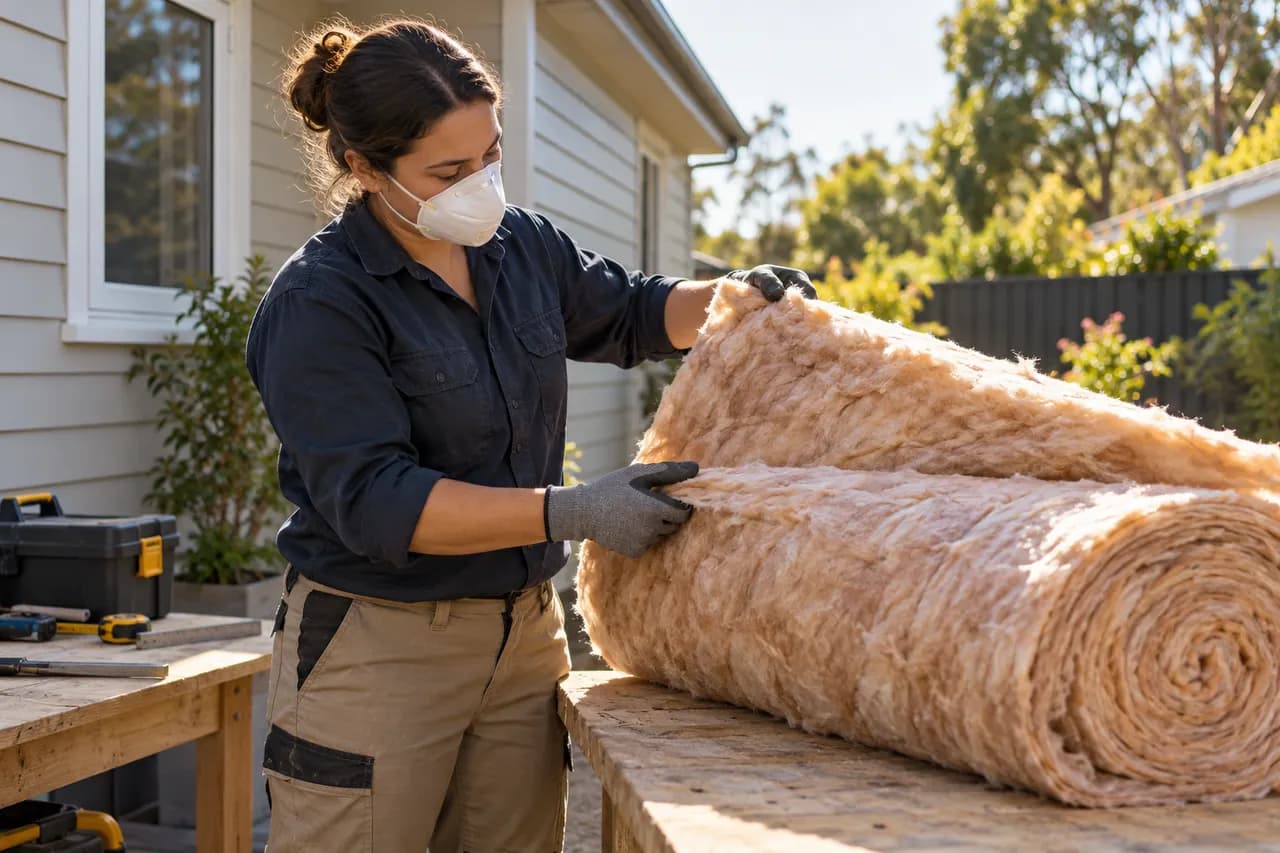
Ceiling insulation keeps warmth in the room below. Manage draughts where cold air gets in, but keep required vents clear.
Keep the warmth. Manage the air.
- Ceiling insulation
- Warm room
- Manage draughts
- Keep required vents clear
Begin with changes you can take with you
Use existing blinds or curtains to limit summer sun and retain warmth on winter evenings. A removable door snake can help with a draught. Keep heating and cooling focused on occupied rooms, and clean filters according to the appliance instructions.
Leave ventilation required for gas appliances clear. If you are unsure which vents are needed, ask for advice before sealing gaps.
In a share house, agree on a few routines together, such as heating occupied rooms or using a dishwasher’s delay start. If the energy account is in your name, you can compare our plans for the address (opens in a new tab), whether you’re already with us or considering a change. Moving an appliance to a different time changes the electricity price only if your tariff or available solar makes that time cheaper.
Some apartments and other rental properties are in embedded networks, where electricity is sold through the building or site. Changing retailer can involve practical barriers. Ask the network operator about your options and any charges before trying to switch.
Turn a landlord request into a specific job
Describe the problem, when it happens and the improvement you are asking for. For example: “The living room gets cold through this door gap. Could we have it assessed and sealed?” A clear job gives the owner something practical to consider.
Include photographs or an assessment where useful. If an appliance is faulty, report that separately as a repair issue rather than treating it only as an optional energy upgrade.
Check your lease and local rules before attaching fittings, changing curtains or installing equipment. In NSW, changes are allowed where the lease permits them or the landlord gives written permission. Landlords cannot unreasonably refuse consent for minor changes, but that does not give blanket permission for every upgrade.
Know what applies locally
As at 13 October 2026, anyone living in an ACT rental can book a free assessment through the Renters’ Home Energy Program (opens in a new tab). Advice is available online, by phone or in person, with suggestions suited to what tenants can change.
As at 13 October 2026, an ACT rental with no ceiling insulation, or insulation below R2, generally needs an upgrade to R5. Existing insulation of at least R2 meets the standard. Exemptions apply. Existing tenancy agreements have a compliance deadline of 30 November 2026; new agreements generally require compliance within nine months of signing.
You can ask the landlord or agent for documentary evidence that the ACT property meets the insulation standard or has a valid exemption. That is a more useful starting point than trying to judge the insulation yourself.
As at 13 October 2026, NSW is considering minimum energy-efficiency rental standards and reviewing consultation feedback. These proposals should not be presented as an existing requirement to upgrade your particular home.
Choose one affordable improvement and check whether permission is needed. If you’re with ActewAGL, our concessions and rebates information (opens in a new tab) can help you check support for your account. If you’re with another retailer, ask it about concessions and payment support. Assistance with today’s bill and a rebate for an appliance upgrade have different eligibility and application steps.
For an EV charger in a rental or shared garage, begin with the parking space, lease and building rules. Ask who approves installation, who pays and how charging electricity will be measured. A permanent charger may need both the owner’s agreement and approval for common property. Keep those decisions ahead of the installer booking.
Related advice: ACT energy rebates: what help can I get? · NSW energy rebates: what help can I get?
Choose the next step for your rental
Start by comparing our plans for your address (opens in a new tab) and checking our concessions and rebates information (opens in a new tab). If paying an ActewAGL bill is difficult, our Staying Connected page (opens in a new tab) explains the support route. If you’re with another retailer, ask it about support for your current account while you work through building improvements with the owner.
We’re here to help you work through the energy side. Call us on 13 14 93 about our plan options, whether you’re already with us or considering a change. For payment support on an ActewAGL account, our Staying Connected team is on 1300 138 574.
Sources12
- ACT Government. ‘Minimum housing standard for ceiling insulation in rental properties’. ACT Government. n.d. https://www.act.gov.au/housing-planning-and-property/renting/minimum-housing-standard-for-ceiling-insulation-in-rental-properties (opens in a new tab) (accessed 13 October 2026).
- ACT Government. ‘Renters Home Energy Program’. Climate Choices. n.d. https://www.climatechoices.act.gov.au/policy-programs/renters-home-energy-program (opens in a new tab) (accessed 13 October 2026).
- ActewAGL. ‘Compare plans’. ActewAGL. n.d. https://www.actewagl.com.au/for-home/compare (opens in a new tab) (accessed 13 October 2026).
- ActewAGL. ‘Concessions and rebates’. ActewAGL. n.d. https://www.actewagl.com.au/help-and-support/concessions-and-rebates (opens in a new tab) (accessed 13 October 2026).
- ActewAGL. ‘Contact us’. ActewAGL. n.d. https://www.actewagl.com.au/contact-us (opens in a new tab) (accessed 13 October 2026).
- ActewAGL. ‘Financial hardship programs’. ActewAGL. n.d. https://www.actewagl.com.au/help-and-support/hardship-programs (opens in a new tab) (accessed 13 October 2026).
- Australian Energy Regulator. ‘Embedded networks customers’. Australian Energy Regulator. n.d. https://www.aer.gov.au/consumers/understanding-energy/embedded-networks-customers (opens in a new tab) (accessed 12 October 2026).
- Australian Government, ‘Charging Options for Houses and Strata Buildings’, energy.gov.au (n.d.), https://www.energy.gov.au/electric-vehicles/owning-electric-vehicle/charging-options-houses-and-strata-buildings (opens in a new tab), accessed 12 October 2026.
- Australian Government. ‘Heating and cooling’. energy.gov.au. n.d. https://www.energy.gov.au/households/heating-and-cooling (opens in a new tab) (accessed 12 October 2026).
- Australian Government. ‘Renters’. energy.gov.au. n.d. https://www.energy.gov.au/households/household-guides/renters (opens in a new tab) (accessed 12 October 2026).
- NSW Fair Trading. ‘Making changes to a rental property’. nsw.gov.au. n.d. https://www.nsw.gov.au/housing-and-construction/rules/making-changes-to-a-rental-property (opens in a new tab) (accessed 13 October 2026).
- NSW Government. ‘Energy rental standards consultation’. NSW Climate and Energy Action. n.d. https://www.energy.nsw.gov.au/nsw-plans-and-progress/regulation-and-policy/public-consultations/meers (opens in a new tab) (accessed 13 October 2026).