Guide · Batteries
How to choose a home battery
We suggest choosing a home battery by the energy you can put into it, the electricity you need later and the jobs you want it to do during a blackout. Start with your own usage, then compare at least two suitable sizes. Ask what the extra capacity will actually save before paying for it.
At a glance
The guide in a minute.
- Size to your routine. Match spare solar with the electricity you use later.
- Compare the extra value. Ask what a second size would actually save.
- Plan backup explicitly. Agree which appliances and circuits will run.
- Check the whole quote. Usable capacity, output, installation and warranty.
Inside the guide
We suggest choosing a home battery by the energy you can put into it, the electricity you need later and the jobs you want it to do during a blackout. Start with your own usage, then compare at least two suitable sizes. Ask what the extra capacity will actually save before paying for it.
6 chapters. Jump to what you need, or read from the start.
Start with your home
A home battery can store spare solar for later, reduce grid purchases and, with the right equipment, provide blackout backup. We’ve written this guide to help you compare the options, whether you already buy energy from us or another retailer. Our shortlist covers systems listed for the ActewAGL Virtual Power Plant, or VPP. Check the exact battery and inverter combination before ordering.
Three things to check before asking for a quote
- Open your bill and solar app. Note the electricity you buy from the grid, the spare solar you export and when each happens. If you can download smart-meter interval data, gather a full year so the comparison includes changing seasons. Your latest bill is still a useful starting point.
- Find the model numbers for your solar inverter and any existing battery in the app, handover paperwork or product labels. The exact equipment helps an installer check retrofit options and compatibility with our VPP.
- Write down what you want to keep running in a blackout, and any planned changes such as electric heating or electric vehicle (EV) charging. Take that list to the quote discussion.
What can a home battery do for me?
For bill savings, look for a regular opportunity to store electricity and use it when buying from the grid would cost more. A common example is a home that exports spare solar during the day and buys electricity in the evening. Some systems can also charge from the grid when electricity is cheaper, subject to the tariff and operating settings.
If blackout protection is your priority, tell the installer which appliances matter and how long you want to run them. Backup must be designed and configured into the system. Buying a battery alone does not guarantee that your home will have power when the grid goes down.
Think about planned changes too. An electric vehicle, or EV, electric heating or heat pump hot water can change both the amount of electricity you use and when you use it. Ask the installer to model those changes alongside your current needs.
Before sizing a battery, consider using more solar directly. Scheduling suitable appliances, pool pumps or EV charging during solar production can reduce grid purchases. This also changes how much spare solar remains available to charge a battery, so use the improved household schedule in your estimate.
What is the difference between kW and kWh?
Capacity is measured in kilowatt-hours, or kWh: how much energy the battery can store. Power is measured in kilowatts, or kW: how quickly the system can supply it. As a simple illustration, 10 kWh could supply a steady 2 kW load for five hours before allowing for reserves and losses. Ask about both numbers, because enough stored energy does not mean the system can run every large appliance together.
Also check whether the advertised capacity is nominal or usable. Nominal capacity is the total stored energy; usable capacity accounts for the manufacturer’s operating limits. Ask whether the quoted usable figure is battery-side direct current (DC) energy or alternating current (AC) energy delivered to the home. These figures are not automatically interchangeable because conversion losses occur.
Ask what battery chemistry is used and why the installer recommends that product. NSW consumer guidance describes both lithium iron phosphate, or LFP, and nickel manganese cobalt, or NMC, batteries. Treat chemistry alongside the complete system design, warranty and support when comparing options.
A user-set backup reserve is separate from the manufacturer’s internal operating buffer. For example, a hypothetical system with 10 kWh of usable AC energy and a 20% backup reserve has 8 kWh above that reserve when full. This is an illustration, not the specification of a particular product. Do not deduct a manufacturer’s unusable buffer again from a figure already described as usable.
Size and savings
How much could a home battery save me?
For solar charging, battery savings come from replacing grid purchases, less the feed-in credits you give up on the solar diverted into storage. Charging and discharging also incur energy losses. Using solar directly already creates savings without a battery, so compare the proposed battery against the same home with the same solar and no battery.
Here is an illustrative calculation, using assumed prices rather than an ActewAGL tariff or a savings promise. Assume a battery supplies an annual average of 6.5 kWh per day to replace grid purchases, electricity costs 35 cents per kWh, the feed-in tariff is 6 cents per kWh, and round-trip efficiency is 90%. The solar used for charging would otherwise have been exported and earned that feed-in credit.
| Calculation | Illustrative result |
|---|---|
| Solar needed to deliver 6.5 kWh at 90% efficiency | About 7.22 kWh per day |
| Grid purchases avoided at 35 cents per kWh | About $2.28 per day |
| Feed-in credits forgone at 6 cents per kWh | About $0.43 per day |
| Net battery saving, calculated before rounding, before other costs or benefits | About $1.84 per day or $672 per year |
If the installed cost after applicable discounts were $9,000, dividing it by the unrounded first-year saving gives a simple payback of about 13.4 years. This arithmetic excludes finance, changing tariffs, degradation, additional operating costs, replacement and VPP effects. It illustrates why the savings estimate matters as much as the purchase price; it is not a forecast for your home.
Ask for a conservative case as well as a central estimate, with the assumptions shown. Show VPP credits and any changes to energy charges separately. If financing the purchase, compare the repayment schedule with the expected reduction in bills.
What size battery do I need for my home?
Start with the electricity your household buys after solar hours and the energy available to charge a battery. A headcount or a neighbour’s system can be a useful conversation starter; your interval data provides the stronger basis for sizing.
Home battery capacity is measured in kWh. Systems around 5 to 50 kWh can be considered, but that is a shopping range, not a complete market limit or a recommended size. The federal program accepts eligible systems from 5 to 100 kWh nominal capacity. In the regulator’s June-quarter 2026 report, the average approved installation fell from 36 kWh in April to 23 kWh in May and June after rebate changes. That evidence does not establish a current 10 to 20 kWh average or a steady trend towards bigger systems.
Gather your electricity bills, current tariff, solar monitoring information and smart-meter interval data if available. Interval data records imports and exports over time, making it more useful than an annual total for understanding charging opportunities and later demand. SunSPOT recommends 12 months or more of continuous data and accounting for major changes to the property.
Ask the installer to compare at least two sizes against that information. For storing spare solar, the useful daily output is constrained by the available charging energy after losses, the battery energy available above reserve, later household demand, and the system’s charge and discharge power. Ask how much extra energy the larger option would actually supply.
The following arithmetic illustrates the effect of a 20% reserve. It assumes capacity is expressed as usable AC energy before the user reserve. It does not establish that the solar system can fill the battery, that these amounts will be needed each day, or that the inverter can supply the required appliances.
| Energy wanted above reserve | Illustrative usable AC capacity |
|---|---|
| 4 kWh | 5 kWh |
| 8 kWh | 10 kWh |
| 12 kWh | 15 kWh |
| 16 kWh | 20 kWh |
| 24 kWh | 30 kWh |
| 32 kWh | 40 kWh |
For example, suppose a home exports 12 kWh of spare solar on a particular day and needs 8 kWh later. Assuming 90% round-trip efficiency, that solar could support about 10.8 kWh of battery output. A 10 kWh usable AC battery with a 20% reserve could supply up to 8 kWh above reserve, subject to timing and power limits. A 15 kWh option would not replace additional grid purchases on that day if the later demand remained 8 kWh. This is an illustrative calculation; repeat the comparison across the year.
Ask for a winter and summer comparison, plus an annual estimate. Include planned changes such as electric heating or a car charger. A bigger battery is worth considering when the model shows that you can regularly charge and use the extra capacity, or when extra backup is a deliberate purchase goal.
Across the region, compare winter heating days with summer solar days. A larger battery needs a realistic charging source when you want to use that extra storage. Include an EV, heat pump or new electric heating in a separate future-use scenario, with the expected purchase timing.
Will a bigger battery save enough to justify the extra cost?
Ask for a smaller and a larger system modelled on the same household use, solar generation and tariff. Request the extra annual savings from the larger system and the extra installed cost. This keeps a change of energy plan, a solar upgrade or a future EV from being silently credited to the extra battery capacity.
For an illustration, suppose moving from 10 to 20 kWh costs another $4,000 and produces only $200 more in annual bill savings. The extra capacity has a simple payback of 20 years. If it instead saves $800 more a year, the same extra cost has a five-year simple payback. Those are assumed figures, before finance, ageing, maintenance and future tariff changes; they show why the extra saving matters more than the size label.
If the larger system is mainly for backup, ask the installer to price that benefit separately. You can then decide how much the additional reserve and supported outage loads are worth to your household without presenting them as bill savings.
Can I charge from the grid through winter?
Grid charging can help where the installed battery and electricity plan allow it. Compare what you pay to charge with the import price avoided later, including losses. For example, delivering 1 kWh from storage at an assumed 90% whole-cycle efficiency needs about 1.11 kWh of charging electricity. At an assumed 10 cents per kWh, that costs about 11.1 cents to avoid a later 40-cent import. The 28.9-cent difference comes before fees and other effects.
Check whether the cheap period is long enough, whether your inverter can charge quickly enough and what the rest of the household pays on that plan. A useful winter calculation should show the charging source, the tariff and the available hours, as well as the battery capacity.
In this example, spare solar after losses is 10.8 kWh, capacity after reserve is 12 kWh and electricity used later is 10.5 kWh. The smallest, 10.5 kWh, is the daily delivery.
Three limits. One useful amount of energy.
Daily delivery in this example:
10.5 kWh
Costs and support
How much does a home battery cost?
For a starting budget, the table below uses Solar Choice’s August 2026 price index, accessed 12 October 2026. These national indicative installation prices include GST and the federal battery discount. They are not ActewAGL quotes or guaranteed local prices. The index separates battery-ready installations from jobs needing an additional inverter.
| Usable capacity | Battery installation with an existing ready system | Battery plus additional inverter |
|---|---|---|
| 10 kWh | $7,784 | $8,284 |
| 20 kWh | $14,972 | $15,772 |
| 30 kWh | $22,489 | $23,089 |
The first column of prices assumes an existing hybrid or battery-ready system. The second includes an additional inverter for AC connection to existing solar. The index notes that meter fees and difficult-installation costs are not ordinarily included. Use these figures to frame a budget, then obtain itemised quotes for your site.
Ask each quote to show the battery, inverter, backup equipment, electrical work and commissioning, with exclusions clearly identified. Check whether switchboard work, meter work, longer cable runs and the proposed backup circuits are included. SolarQuotes’ installation guidance illustrates how backup and site requirements can change the total cost.
Compare quotes using the same usable capacity, output, backup scope and warranty conditions. A lower price per kWh can be a poor fit if you rarely use the additional storage. Require the installer to show the difference in expected annual savings between the options.
What battery rebates can I get in the ACT or NSW?
As at 13 October 2026, the federal Cheaper Home Batteries Program supports eligible systems from 5 to 100 kWh nominal capacity, with certificates available for the first 50 kWh of usable capacity. Product and installation conditions apply. Confirm the exact battery and inverter approval requirements with your installer at the time of installation, and check that the installer has the appropriate Solar Accreditation Australia accreditation.
The discount is certificate-based, not a guaranteed fixed dollar amount or an exact 30% off every quote. Under the schedule available as at 13 October 2026, installations from 1 May to 31 December 2026 use a small-scale technology certificate, or STC, factor of 6.8, applied at 100% to the first 14 kWh of usable capacity, 60% above 14 to 28 kWh, and 15% above 28 to 50 kWh. The factor falls to 5.7 from 1 January to 30 June 2027. Installation date governs the factor.
As at 13 October 2026, eligible new ACT applicants can access Sustainable Household Scheme loans of $2,000 to $20,000, repayable over up to ten years. The standard household rate is 3%, with separate arrangements for eligible Home Energy Support Program participants. Earlier participants and households that applied or received approval before 1 July 2026 retain the $15,000 scheme cap. A loan must be repaid; include repayments in your decision.
As at 13 October 2026, eligible NSW households may receive an incentive for connecting an eligible battery to a participating VPP provider. The amount depends on the provider’s offer and applicable rules. This can be combined with the federal battery discount when both programs’ requirements are met. Confirm your actual entitlement before deducting it from the quote.
Ask the installer to identify every discount already included in the final price and when you receive it. Do not subtract the federal discount a second time from a price already advertised after that discount.
Keep the final cost, the cash needed on installation day and loan repayments on separate lines. A confirmed discount reduces the purchase cost. A later reimbursement can leave you paying more upfront. A loan changes when you pay, while the principal and any interest still need to be repaid.
Backup and VPPs
Why am I buying power when the battery still has charge?
Charge shows how much energy remains; it does not show how much power the battery can deliver right now. Grid imports can occur when household demand exceeds the battery’s output, a reserve is reached, a schedule holds charge or a VPP event changes operation. Capture the time, solar output, household demand, battery charge and operating mode together, then ask the installer or operator to explain that event.
What can the battery run at the same time?
The battery inverter’s continuous output limits how many appliances the battery can supply together. As an illustration, if a home is drawing 7 kW and its battery system can supply only 5 kW at that moment, the remaining 2 kW must come from the grid while grid-connected. Extra stored kWh do not remove that power limit.
Ask for the configured charge power, continuous discharge power and backup output. Confirm how the design works with your home’s single-phase or three-phase supply and which circuits operate during an outage. For example, Tesla’s Australian Powerwall 3 datasheet describes a single-phase unit with configurable output; SolarEdge’s Australian guidance says three-phase integration differs from single-phase integration.
Will the battery power my home during a blackout?
Backup depends on the battery, inverter, additional equipment and installation design. Ask which circuits will stay powered, the maximum backup load, whether your solar can recharge the battery during an outage, and what happens if the battery runs out. During an outage, you may need to manage appliances to avoid overloading the inverter.
As at 13 October 2026, our compatibility table shows a 20% minimum state of charge for each currently listed battery family. Check your exact model again before joining. The agreement also limits the customer backup setting to no higher than 20%. Confirm how the installed system uses that reserve during an outage; a percentage alone cannot promise a number of backup hours.
Give the installer a short outage list: fridge, lights, communications and any essential pump or other load. Ask how long the reserve would support that list, which phase and circuits are connected, and whether solar can recharge the battery while the grid is down. Have the installer demonstrate the completed backup setup and show you the overload and restart instructions.
How would my battery work in a VPP?
A VPP coordinates household batteries to support the grid. During an event, we can instruct a participating battery to charge, discharge or hold charge. This may change grid imports and exports, so consider the electricity plan, VPP benefit and battery operation together.
Our current participation conditions include compatible equipment, an ActewAGL electricity contract, a smart meter, appropriate permissions and continuous internet through Wi-Fi or Ethernet. A SIM-based 4G or 5G connection is not accepted as the primary connection. The battery must allow grid charging and export, and cannot simultaneously participate in another VPP. If you’re with another retailer, include the cost of an eligible ActewAGL electricity plan in your comparison before deciding to join our VPP.
The current VPP agreement also specifies a fixed export limit of at least 5 kW and additional metering for an AC-coupled installation. External hardware connected to the inverter’s Modbus port is excluded. Ask us and the installer to check the entire configuration, including an existing solar system or energy controller, before you buy for VPP participation.
Before joining, ask how ordinary household operation changes during a VPP event, how to identify an event in the app and which settings you can change. Keep the reserve, warranty confirmation and the household bill comparison with the signed agreement.
As at 13 October 2026, our VPP agreement permits customer termination for convenience with at least 30 days’ written notice. Its contract specifics list exit fees as not used. Check the offer’s term, renewal provisions and the effect on plan benefits or any battery-purchase arrangement. Ask for the end date and the settings that will be restored when participation finishes.
As at 13 October 2026, our Battery Power Top-Up offers a $60 quarterly credit, or $240 over four eligible quarters. Battery Saver supplies its VPP benefit through a reduced daily supply charge. Compare the whole annual bill under the applicable offer, including any changes to import rates and export credits. Keep a one-off bonus separate from recurring savings.
The agreement estimates a bill impact of no more than $50 including GST per 12 months, but excludes demand-charge tariffs and modes other than self-consumption, including time-based control. Treat that as a conditional estimate, rather than automatically deducting $50 from every household’s reward calculation.
Federal discount eligibility and eligibility for our VPP are separate checks. The federal program requires grid-connected systems to be technically VPP-capable, but it does not require you to join a VPP. Our service has its own equipment and site requirements.
During solar hours your home uses solar first. Surplus can be stored in a home battery within system limits. After solar hours the battery supplies later use, and the grid covers any shortfall.
Solar now. Stored energy later.
During solar hours
Your solar
Home uses solar first
Surplus to store
Home battery
Within system limits
After solar hours
Later use
Grid covers any shortfall
The opportunity depends on the home, rates and equipment.
Quotes and equipment
How do I choose a battery installer?
Check electrical licensing and battery installation accreditation, and obtain more than one quote. The Australian Government’s consumer guide recommends checking the seller’s experience, reviews and consumer protection arrangements. Ask who will respond locally if the system develops a fault and what the installer’s workmanship warranty covers.
Ask the installer to explain the proposed battery location and its suitability for your home. ACT guidance identifies ventilation, fire clearances and protection from water and heat as installation considerations. Manufacturer temperature limits and warranty conditions also matter, so ask how the system will perform in the temperatures at that location.
Before final handover, ask for the exact model and serial numbers, electrical compliance paperwork, applicable approvals, warranty documents, monitoring access and operating instructions. Have the installer demonstrate normal operation and the agreed backup function, and explain the reserve and tariff settings. Keep the installer and manufacturer contact details with these records.
What should my battery quote include?
- What do my import and export patterns show, and why is this size appropriate?
- What extra annual saving would the next battery size provide?
- What are the exact battery and inverter identifiers, and is this combination on our current VPP list?
- What is the usable capacity, and what power can the configured system supply continuously?
- Which circuits work during a blackout, and what equipment is included?
- What battery, inverter and workmanship warranties apply, including VPP use, labour and travel?
- What is the total installed cost, what is excluded, and which discounts are already included?
- Who handles faults, monitoring access and future setting changes?
If you’re considering our VPP, which battery brands work with it?
As at 13 October 2026, we list selected Tesla, Sungrow, SolarEdge, Sigenergy, AlphaESS and LG battery systems. Use the following shortlist to compare suitable designs, then ask us to confirm the exact battery and inverter combination before you order. A listed brand does not mean every model is accepted or that the quoted equipment is available from your installer.
| Brand and listed family | Why put it on your shortlist | What to confirm |
|---|---|---|
| Tesla Powerwall 2 and 3 | Powerwall 3 combines 13.5 kWh usable AC storage with an integrated solar inverter. Consider it when that capacity and integrated design suit your home. | The retrofit design, configured output, backup equipment and applicable warranty. |
| Sungrow listed SBR and SBH systems | The SBR range offers modular storage from 6.4 to 25.6 kWh in 3.2 kWh steps. Consider it when you want a capacity matched in smaller increments. | The exact battery and hybrid inverter pairing, output power and conditions for future expansion. |
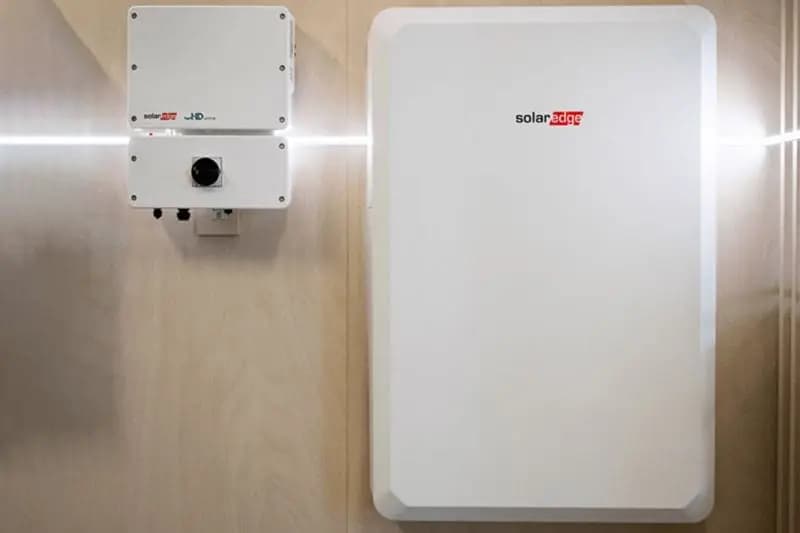
| SolarEdge Home Battery | A logical option to investigate if your home has, or will use, a compatible SolarEdge inverter. Its Australian product guidance describes DC coupling and inverter-dependent backup. | The inverter generation, backup interface, phase arrangement and warranty treatment of external control. |
| Sigenergy listed SigenStor systems | SigenStor uses a modular architecture with up to six battery packs per unit. Consider it when a modular system suits your installation. | The exact energy controller, current Australian warranty and whether any recall applies to the supplied equipment. |
| AlphaESS listed SMILE and Storion systems | Another option to include in your quote comparison. AlphaESS offers hybrid home battery configurations; use the exact ActewAGL-listed combination. | The battery and inverter identifiers, usable capacity, output, backup design and applicable warranty. |
| LG listed RESU systems | Relevant when checking whether an existing RESU system with a listed SolarEdge inverter can participate. Treat existing-system eligibility separately from new-product availability. | The exact model, serial number, recall status and any completed remedy. |
Choose between those systems by their fit with your home: usable energy, continuous power, existing inverter, backup design, expansion conditions, warranty and local service. Ask each installer to price the same requirements. A cheaper system with the wrong backup circuits, or a larger system your home rarely uses, may answer a different question from the one you asked.
If you may want more storage later, ask when extra modules can be added, which modules remain compatible and whether the inverter or backup equipment also needs changing. Modular expansion has product-specific conditions. Get the expansion rules and warranty treatment in writing before relying on that option.
How do I check the equipment before ordering?
An official recall covers certain Sigenergy SigenStor 8, 10 and 12 kW single-phase energy controllers with quick-connect AC plugs sold between 4 March and 18 November 2025. The issue concerns plugs that may overheat. The remedy includes a free replacement with an updated plug. Confirm that a quoted controller is unaffected or has received the prescribed remedy; the recall does not describe every Sigenergy system as affected.
Selected LG home batteries are also subject to recalls. The official notice identifies affected models and manufacturing periods and directs owners to shut down affected batteries until remedied. If you already own a listed LG system, check its exact identity and serial number through the official recall process before considering VPP enrolment.
What should I look for in the battery warranty?
A battery warranty may contain separate promises about defects, remaining capacity, cycles or total energy throughput. Throughput means the accumulated energy delivered over time, commonly expressed in megawatt-hours, or MWh. One MWh is 1,000 kWh. One headline number does not tell you what is covered, and the inverter and other components can have different warranties.
| Published warranty example | What the terms illustrate |
|---|---|
| Tesla Australian and New Zealand Powerwall warranty effective 3 September 2026 | Ten years and 70% capacity retention. Defined solar self-consumption, time-based control and backup uses have unlimited cycles; other applications have a 37.8 MWh aggregate-throughput limit, subject to conditions. |
| Sungrow Australian HV battery warranty effective 21 May 2026 | Ten years from installation or 126 months from manufacture, whichever comes first, with at least 70% retention under its conditions. Daily self-consumption and backup are distinguished from other applications with model-specific throughput limits. |
| SolarEdge published Home Battery 400V warranty effective 1 January 2026 | The published terms include a ten-year period, 70% retention and a 26 MWh limit for third-party management. Ask SolarEdge to confirm the warranty applicable to the quoted Australian product and the intended ActewAGL VPP operation. |
| Sigenergy Australian and New Zealand warranty dated 26 May 2026 | Battery and energy controller product cover: ten years. Battery performance: 70% usable energy for ten years or the model’s minimum throughput, whichever comes first. Internet conditions and component-specific periods also apply. |
| AlphaESS Australian residential warranty dated 30 October 2024 | For its listed products, the performance terms specify 70% usable capacity at 120 months, subject to a throughput condition below 3.12 MWh per usable kWh. Grid services including VPP operation are listed. Obtain the warranty for the precise quoted model and installation date. |
Ask for the actual warranty documents for the battery, inverter and backup equipment. Confirm the start date, capacity promise, cycling or throughput limits, internet and registration requirements, and who pays labour, freight and travel. Ask specifically how operation in our VPP is treated. The VPP agreement requires customers to make their own enquiries about its impact on the product warranty.
For other shortlisted systems, request the current Australian terms for the exact products in the quote. A brochure headline is not a complete warranty comparison. Keep the product warranty and the installer’s workmanship warranty together with your purchase records.
For example, a 26 MWh throughput condition means 26,000 kWh in the defined warranty measurement. At an assumed 10 kWh a day, that total would be reached in about 7.1 years. The warranty’s definitions and covered applications determine whether the limit applies; ask the manufacturer to confirm the proposed VPP use in writing.
Your next move
Choose the next question
Related advice: Why is my battery half full but I am still buying power? · How do I use more of the solar I already have?
Find battery options and help with your plan
Related advice: Is a home battery worth it for me? · Battery rebates in the ACT and NSW: what can I get? · VPPs in the ACT and south-east NSW: is joining worth it?
Bring your bill, solar information and planned home upgrades to the quote discussion. Ask the installer to explain why the size, output and backup design suit your home. If you want to join our VPP, ask us to confirm the exact equipment and account requirements before you order.
Start with our battery storage page (opens in a new tab) to explore the installation options through Electrify with ActewAGL. Ask the installer for an itemised quote and check the address and eligibility requirements.
For the energy-plan side, read Battery Saver (opens in a new tab) and Battery Power Top-Up (opens in a new tab), then compare our available plans (opens in a new tab) using the same household usage. Joining our VPP requires an eligible ActewAGL electricity account, so include any change of retailer in the whole-bill comparison.
If you’re already with us, use My.ActewAGL (opens in a new tab) and our bill-reading guide (opens in a new tab) to gather the account details for the comparison. If you’re with another retailer, use its bills, usage data and export rate for your current situation.
Your checklist, at your pace.
Questions people also ask
Quick answers.
What size home battery do I need?
It depends on the spare solar available to charge the battery and the electricity your household buys after solar hours, not on headcount alone. Smart-meter interval data gives the strongest basis; SunSPOT recommends 12 months or more of continuous data. Ask the installer to compare at least two sizes against your data and to show how much extra energy the larger option would actually supply. A bigger battery is worth considering when you can regularly charge and use the extra capacity, or when extra backup is a deliberate goal.
How much does a home battery cost?
As a starting budget, Solar Choice’s August 2026 price index shows national indicative installation prices of about $7,784 for 10 kWh of usable capacity and $14,972 for 20 kWh, where the home already has a battery-ready system. These include GST and the federal battery discount, but are not ActewAGL quotes or guaranteed local prices. Meter fees and difficult-installation costs are not ordinarily included, so get itemised quotes for your site.
How long does a home battery last?
Check the warranty rather than a headline lifespan. The Australian battery warranties we compared each run for about ten years and promise around 70% of capacity over that period, subject to conditions. Many also include cycle or energy-throughput limits that can end cover sooner, depending on how the battery is used. Ask for the actual warranty documents for the battery, inverter and backup equipment, and how VPP operation is treated.
Will a home battery keep my power on during a blackout?
Only if the system is designed and configured for backup. Buying a battery alone does not guarantee power when the grid goes down. Backup depends on the battery, inverter, additional equipment and installation design. Ask which circuits will stay powered, the maximum backup load, whether solar can recharge the battery during an outage and what happens if the battery runs out.
What battery rebates can I get in the ACT or NSW?
As at 13 October 2026, the federal Cheaper Home Batteries Program supports eligible systems from 5 to 100 kWh nominal capacity, with certificates for the first 50 kWh of usable capacity. The discount is certificate-based, not a fixed dollar amount or an exact 30% off. Eligible new ACT applicants can access Sustainable Household Scheme loans of $2,000 to $20,000 at 3% interest, and eligible NSW households may receive an incentive for connecting a battery to a participating VPP. Confirm what is already included in your quote.
Do I have to join a VPP to get the federal battery discount?
No. The federal program requires grid-connected systems to be technically VPP-capable, but it does not require you to join a VPP. Joining our VPP is a separate check with its own requirements, including compatible equipment, an ActewAGL electricity contract, a smart meter and continuous internet through Wi-Fi or Ethernet. Ask us to confirm the exact battery and inverter combination before you order.