Article · Batteries
VPPs in the ACT and south-east NSW: is joining worth it?
On this page
A virtual power plant, or VPP, can earn a benefit from a compatible home battery, while allowing a provider to operate it. Whether joining is worthwhile depends on the payment, the electricity plan and the energy available for your home. Compare the annual household result and the operating conditions before signing.
Have your bill and battery and inverter model numbers ready. Write down what you want the battery to cover at home, including winter heating or essential backup. Then compare the VPP payment with the whole electricity plan and the battery settings it requires.
In this example, spare solar after losses is 10.8 kWh, capacity after reserve is 12 kWh and electricity used later is 10.5 kWh. The smallest, 10.5 kWh, is the daily delivery.
Three limits. One useful amount of energy.
Daily delivery in this example:
10.5 kWh
What does a VPP do with my battery?
A VPP connects participating batteries into a coordinated network. During one of our VPP events, we can instruct the battery to charge, discharge or hold charge. Ask us to walk through an ordinary evening and an event using your tariff and household use. That should show what you would import or export and what stored energy would remain available.
What ActewAGL options can I compare?
Our Battery Saver plan (opens in a new tab) provides the VPP benefit through a reduced daily supply charge. Battery Power Top-Up (opens in a new tab) lets an eligible customer stay on another ActewAGL residential electricity plan and receive a bill credit; it is excluded from Battery Saver. Check the rates and requirements for your address.
As at 13 October 2026, Battery Power Top-Up advertises $60 per quarter, or $240 over four eligible quarters. It also advertises a one-off $100 sign-up bonus for an eligible first-time VPP participant registering an eligible battery. Confirm eligibility and payment timing; keep the one-off amount separate from recurring annual value.
How do I work out whether the VPP leaves me better off?
Compare the annual electricity bill and battery operation with and without participation. Include supply charges, usage rates at the times you import electricity, export credits, VPP credits and any fees. Separate the effect of changing electricity plans from the payment for participating. If the battery is already installed, its original purchase cost is common to both scenarios.
Illustrative comparison only. Assume $240 of annual VPP credits, $90 of additional electricity cost and $30 of export credits forgone because the battery operates differently. With no other changes, the household is $120 ahead. These assumptions are not a forecast of an ActewAGL plan or dispatch costs. Supply-charge changes and other benefits or costs must also be included when they apply.
| Illustrative annual change | Amount |
|---|---|
| Assumed VPP credits | $240 |
| Additional electricity cost | −$90 |
| Export credits forgone | −$30 |
| Net household benefit | $120 |
Put the recurring VPP credit beside any change in electricity prices, imports and exports. If changing retailer is part of the offer, include the proposed plan’s cost too. Ask for a comparison using your own household record, including winter heating where relevant. Keep the one-off NSW incentive separate from the ongoing annual result.
Does ActewAGL limit the cost of operating the VPP?
Our VPP agreement estimates an impact of no more than $50 including GST per 12 months, but excludes demand-charge tariffs and modes other than self-consumption, including time-based control. Use your actual tariff and mode when assessing that statement. It is a conditional estimate, not an unconditional $50 cap or a guaranteed net reward.
How much charge stays in my battery, and will backup still work?
As at 13 October 2026, our compatibility table shows 20% minimum charge for the currently listed families. Recheck the exact battery and inverter when joining. Ask the installer which circuits run in an outage and whether solar can recharge the battery then. Our agreement limits the customer backup setting to no higher than 20%; confirm whether that reserve meets your backup needs.
For scale, a hypothetical 10 kWh usable battery with a 20% reserve holds 2 kWh at that setting. At a steady 0.5 kW load, that is four hours before losses and system limits. A fridge, lights and pump will not necessarily draw a steady load, so ask the installer for a scenario using your essential equipment.
Can I change settings or pause an event?
Ask us which app settings you can change, whether an event override is permitted and what happens to participation if you use it. Our agreement gives us control of the operated product and requires its settings and connectivity conditions. Keep the answer for your exact equipment with the contract, so you know which controls remain available.
Do I qualify in the ACT or NSW?
Joining our VPP requires an eligible ActewAGL residential electricity account, smart meter, compatible installed equipment and continuous internet. As at 13 October 2026, our agreement also requires a fixed export limit of at least 5 kW, extra metering for an AC-coupled installation and no external hardware connected to the inverter’s Modbus port. Have the entire configuration checked before buying for this offer.
As at 13 October 2026, the separate NSW VPP incentive accepts eligible batteries with capacity more than 2 kWh and up to 50 kWh, while its payment calculation uses capacity made available to the grid up to 28 kWh. The actual payment depends on the provider and contract. Federal purchase support has separate rules: qualifying grid-connected equipment must be VPP-capable, but joining is optional.
Check the NSW VPP incentive and provider route (opens in a new tab) before including a payment in the budget. Use the federal eligibility page (opens in a new tab) for the battery-purchase discount.
What should I check in the battery warranty?
Request the current Australian warranty for the precise battery and inverter, and written confirmation of the intended ActewAGL use. Some warranties distinguish self-consumption from other applications or apply a total-energy limit. Ask whether VPP cycling counts towards that limit and who pays labour, freight and travel if a fault occurs.
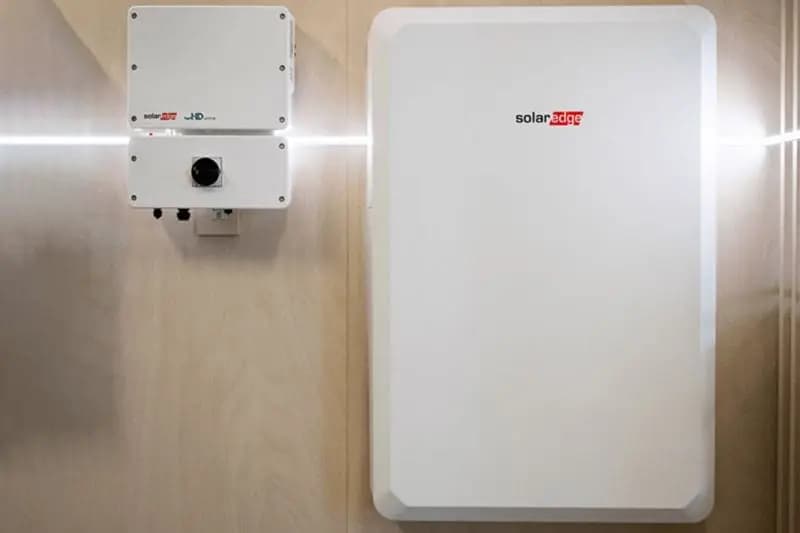
For example, Tesla’s Australian and New Zealand terms distinguish defined self-consumption, time-based control and backup from other applications. SolarEdge’s published Home Battery 400V terms specify a 26 MWh limit, equal to 26,000 kWh, for third-party management. A brochure saying “ten years” does not resolve which conditions apply to your setup.
How can I recognise what happened during an event?
If an event looks unexpected, save its time, battery charge, household demand, solar output and grid imports or exports. Ask our team to explain the event if you are in our VPP; ask the operator for another VPP. Those records give the team something specific to investigate. An app’s headline saving alone does not measure the whole household result.
What if I move home or change my electricity plan?
Before booking a move or changing retailer, check what happens to VPP participation, outstanding payments and the electricity plan. Ask the operator about notice, equipment eligibility at the new address and any incentive conditions. Keep the response with the services agreement.
For a move, confirm the new home's battery and internet arrangements separately from the old system. For a plan review at the same home, compare total prices and operating benefits. A new contract or address needs its own eligibility check.
What should I check before signing or leaving?
- Get the tariff, recurring benefit, any one-off payment and eligibility in writing.
- Ask how dispatch, charging and minimum reserve affect your own electricity use.
- Check equipment compatibility and the manufacturer’s warranty conditions for the proposed use.
- Read notice periods, renewal, changes to benefits and any consequences of ending participation.
- Ask what happens to the electricity plan, credits or incentive if you move, change retailer or leave the VPP.
As at 13 October 2026, you can end our VPP agreement for convenience with at least 30 days’ written notice. The contract specifics list exit fees as not used. Ask us for written confirmation of the finish date, the electricity-plan and credit consequences, and the settings restored afterwards. If a purchase-linked bonus or separate incentive is involved, check its terms and conditions as well.
Before deciding, get the annual comparison and the operating answers in writing. Check that the required reserve fits the backup jobs you listed, and that the warranty covers the intended operation. If an important answer is still missing, resolve it before signing rather than assuming the equipment or app will allow it.
Related advice: How to choose a home battery · Why is my battery half full but I am still buying power?
Talk to us before joining a VPP
Compare our Battery Saver (opens in a new tab) and Battery Power Top-Up (opens in a new tab) information, then read the services agreement linked above. If you’re with another retailer, include the cost of the proposed ActewAGL electricity plan in the comparison.
Sources10
- ActewAGL, ‘Battery Power Top-Up’, ActewAGL (n.d.), https://www.actewagl.com.au/energy-plans/battery-power-top-up (opens in a new tab), accessed 13 October 2026.
- ActewAGL, ‘Battery Saver’, ActewAGL (n.d.), https://www.actewagl.com.au/energy-plans/battery-saver (opens in a new tab), accessed 13 October 2026.
- ActewAGL, ‘Contact Us’, ActewAGL (n.d.), https://www.actewagl.com.au/contact (opens in a new tab), accessed 13 October 2026.
- ActewAGL, ‘Virtual Power Plant Services Agreement’, ActewAGL (effective 1 July 2026), https://www.actewagl.com.au/-/media/files/legal/2026-06-aar2146-vpp-service-agreement.pdf?hash=7BD085FE317E5EA3EB22DC415865D2A5&rev=450e6c095fe8491dbd8b8fe2c9fd4942 (opens in a new tab), accessed 13 October 2026.
- Australian Government, ‘Batteries’, energy.gov.au (n.d.), https://www.energy.gov.au/solar/get-know-solar-technology/batteries (opens in a new tab), accessed 13 October 2026.
- Department of Climate Change, Energy, the Environment and Water, ‘Eligibility Information for the Cheaper Home Batteries Program’, DCCEEW (updated 1 May 2026), https://www.dcceew.gov.au/energy/programs/cheaper-home-batteries/eligibility-information (opens in a new tab), accessed 13 October 2026.
- NSW Government, ‘Guide to Owning a Battery’, NSW Climate and Energy Action (n.d.), https://www.energy.nsw.gov.au/households/upgrades/battery/guide (opens in a new tab), accessed 13 October 2026.
- NSW Government, ‘Virtual Power Plant (VPP) Incentive’, NSW Climate and Energy Action (updated 31 August 2026), https://www.energy.nsw.gov.au/households/grants-rebates/household-energy-saving-upgrades/virtual-power-plant-vpp-incentive (opens in a new tab), accessed 13 October 2026.
- SolarEdge, ‘Limited SolarEdge Home Battery 400V Warranty’, SolarEdge Knowledge Center (effective 1 January 2026), https://knowledge-center.solaredge.com/sites/kc/files/Limited-Product-Warranty-SolarEdge-Home-Battery-400V-effective.pdf (opens in a new tab), accessed 13 October 2026.
- Tesla, ‘Powerwall Warranty: Australia and New Zealand’, Tesla Energy Library (effective 3 September 2026), https://energylibrary.tesla.com/docs/Public/EnergyStorage/Powerwall/General/Warranty/en-au/Powerwall-Warranty-AU-NZ-EN.pdf (opens in a new tab), accessed 13 October 2026.